

Auto Accident Injury Clinic in Shoreline, WA
Recovering from a motor vehicle collision requires prompt and specialized medical attention to prevent lingering complications. Family Health Care provides comprehensive evaluations and targeted treatments for musculoskeletal injuries and trauma resulting from car crashes. Led by Dr. Dinh Tran, MD, and Dr. Nguyen, MD, our team focuses on creating customized recovery plans designed to alleviate your pain, support your healing process, and safely restore your overall well-being. For more information, contact us or request an appointment online. We are conveniently located at 1507 NE 150th St, Suite A, Shoreline, WA 98155.
Schedule your initial appointment to determine the best subscription for your needs; an active subscription is required for ongoing care.
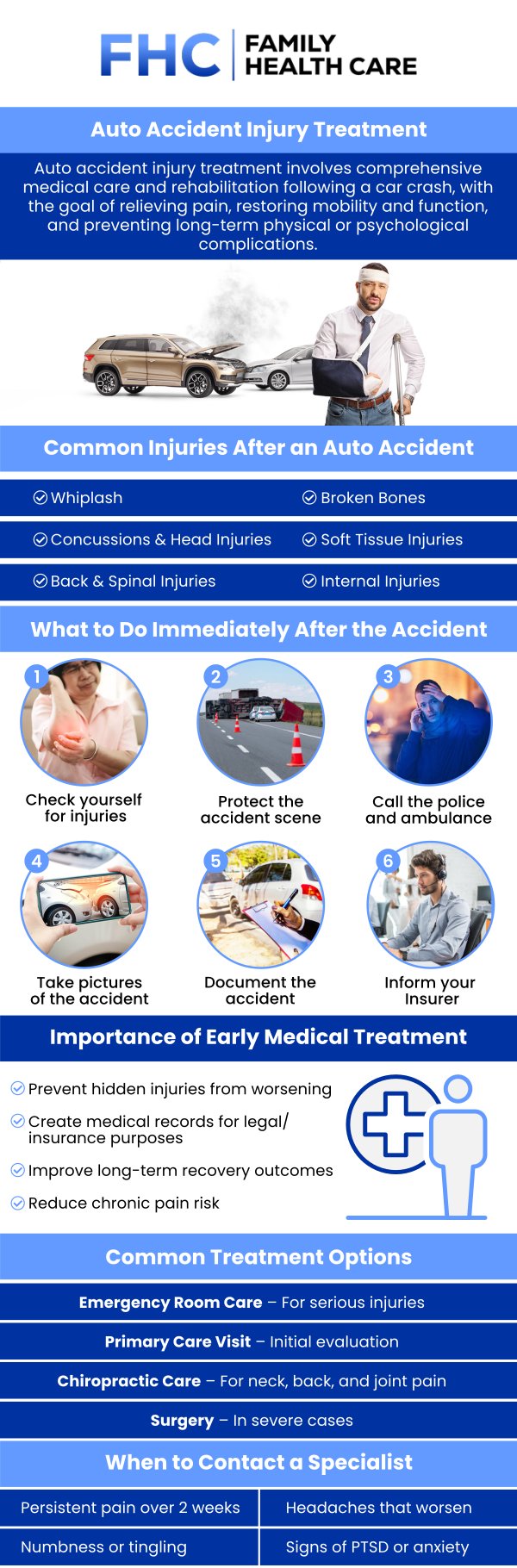
Table of Contents:
How soon after a car accident is it important to have an injury evaluation?
What injuries may not cause noticeable symptoms immediately after an auto accident?
What can I expect during my first medical evaluation after a car accident?
How are neck, back, and musculoskeletal injuries evaluated after an auto accident?
How does Dr. Dinh Tran, MD, help patients manage auto accident injuries at Family Health Care in Shoreline, WA?
Seek emergency medical care immediately if you have symptoms that could signal a serious injury. Call 911 or your local emergency number for trouble breathing, chest pain, severe abdominal pain, uncontrolled bleeding, fainting, confusion, a worsening headache, repeated vomiting, or new weakness or numbness. Severe neck or back pain also requires urgent assessment, especially after a high-impact crash. Do not drive yourself if you feel dizzy, confused, or otherwise impaired, and do not wait for an office appointment if you have emergency symptoms.
If your symptoms are mild, contact Family Health Care promptly—ideally the same day or within 24 to 48 hours—to discuss an evaluation and the appropriate care setting. Neck pain, concussion symptoms, and other injuries may not become noticeable until hours or days after a collision. If symptoms develop or worsen, seek care sooner rather than waiting for a scheduled appointment.
Even if you feel well, get medical advice promptly after a high-impact collision, a significant head strike, or loss of consciousness. Children, older adults, pregnant people, and anyone taking blood thinners may need evaluation even when symptoms seem minor. After a minor collision with no symptoms or concerning circumstances, an emergency department visit may not be necessary; a healthcare professional can help you decide whether monitoring, an office visit, or urgent care is appropriate.
An injury evaluation gives a clinician an opportunity to review your symptoms, check for injuries, explain warning signs, and recommend treatment, testing, or referral when needed. If pain or other symptoms appear days later, it is still important to seek care.
Feeling fine immediately after a car accident does not always mean you are uninjured. Your body’s stress response can temporarily reduce pain awareness, while swelling and other symptoms may develop over the following hours or days.
Whiplash and other soft tissue injuries
The sudden movement of a collision can strain muscles, ligaments, and tendons, particularly in the neck, shoulders, and back. Pain, stiffness, headaches, or difficulty moving may not appear until hours or days later.
Concussions and other head injuries
A concussion can occur when a sudden jolt causes the brain to move inside the skull—even without a direct blow to the head or loss of consciousness. Symptoms may include headaches, dizziness, nausea, sensitivity to light, difficulty concentrating, or changes in sleep.
Internal bleeding and organ injuries
Injuries to organs such as the liver, spleen, or kidneys may cause little discomfort at first. Increasing abdominal pain, swelling, faintness, unusual weakness, or blood in the urine can be warning signs.
Back, spinal, and nerve injuries
Injuries to spinal joints, discs, and surrounding tissues may become more noticeable as inflammation develops. Symptoms can include back pain, pain traveling into an arm or leg, tingling, numbness, or weakness.
Small or nondisplaced fractures
Some fractures, including certain wrist, rib, and foot fractures, can initially feel like bruises or mild soreness. Persistent pain in one spot, swelling, or difficulty using or bearing weight on the affected area may indicate a need for evaluation and imaging.
Do not assume ongoing pain is simply part of recovering from the crash.
Emotional and psychological effects
The effects of an auto accident are not always physical. Anxiety, nightmares, sleep problems, or fear of driving may emerge days or weeks afterward.
If these symptoms persist or interfere with daily life, discuss them with your primary care provider. A visit with Family Health Care can offer an opportunity to talk about both physical symptoms and emotional concerns, including whether mental health support may be helpful.
When to seek medical care
Seek emergency care immediately for:
• A severe or worsening headache, repeated vomiting, confusion, unusual drowsiness, or seizures
• Fainting, trouble breathing, or chest pain
• Severe or increasing abdominal pain
• New weakness or numbness, difficulty walking, or loss of bladder or bowel control
A prompt medical assessment is especially important after a significant collision, a head impact, or the onset of new symptoms. People who take blood thinners, are pregnant, or are older adults should seek medical advice promptly, even when symptoms seem mild.
At Family Health Care, your first medical evaluation after a car accident focuses on understanding your symptoms, checking for injuries, and developing a personalized plan for treatment and follow-up. Even if you feel well immediately after the crash, symptoms can develop over the next several hours or days.
If you have severe symptoms or suspect a serious injury, seek emergency care rather than waiting for an office appointment.
Your Family Health Care clinician will ask when and how the accident happened, whether you wore a seat belt, whether the airbags deployed, and whether you hit your head or lost consciousness. They will also ask about symptoms such as pain, dizziness, headaches, nausea, numbness, weakness, or changes in memory and concentration.
Share any existing medical conditions, previous injuries, medications—especially blood thinners—and any possibility of pregnancy. Mention all symptoms, even if they seem minor or unrelated to the crash.
Your evaluation will typically include checking your blood pressure, heart rate, breathing, and other vital signs. Depending on your symptoms and how the accident occurred, your clinician may examine your head, neck, back, chest, abdomen, and limbs. They may also check your strength, sensation, reflexes, balance, and mental alertness.
Not everyone needs X-rays, CT scans, or other tests after a car accident. Your clinician will recommend appropriate next steps based on your symptoms, examination, accident details, and individual risk factors. This may include referral for imaging, additional testing, or specialist care.
Follow-up and symptoms to watch for
Follow-up care helps your clinician monitor your recovery and reassess symptoms that persist, worsen, or develop later. Keep your care instructions and consider noting when symptoms occur and how they affect your daily activities.
Neck, back, and other musculoskeletal symptoms can appear immediately after an auto accident or develop over the following hours or days. A medical evaluation helps identify injuries, assess how they affect movement and daily activities, and determine appropriate treatment and follow-up.
At Family Health Care, an evaluation begins with a review of your symptoms and medical history, followed by a physical examination. Depending on your findings, imaging, specialist evaluation, or emergency care may be recommended.
Performing a physical examination
The examination may include checking painful areas for tenderness, swelling, bruising, restricted movement, or visible changes. When safe and appropriate, your clinician may also assess walking, joint stability, muscle strength, sensation, and reflexes.
These findings help identify signs of muscle strains, ligament sprains, joint injuries, fractures, or nerve involvement. If a serious neck or spine injury is suspected, movement may be limited and emergency evaluation may be necessary. Do not force painful movements or try to “test” an injury yourself.
Not every auto accident injury requires imaging. Your clinician will consider the details of the crash, your symptoms, examination findings, and established clinical guidelines when deciding whether additional testing is appropriate.
Planning treatment and follow-up
Your evaluation helps guide an individualized care plan. Depending on the injury, recommendations may include activity modifications, pain management, rehabilitation, or referral to a specialist.
If you’re experiencing pain or other symptoms after a car accident, contact Family Health Care in Shoreline, WA, to ask about an evaluation with Dr. Dinh Tran, MD. An appointment can help identify your concerns, determine appropriate next steps, and establish a plan for follow-up care. Confirm the practice’s available auto accident injury services when scheduling.
A medical evaluation generally includes a review of the accident, your medical history, and any symptoms affecting your daily activities. Neck pain, back pain, stiffness, headaches, dizziness, and reduced mobility are important to discuss—even if they develop hours or days after the collision.
Depending on the findings, care may include appropriate pain management, recommendations for modifying activities, and guidance on safely returning to normal movement. Physical therapy or specialist referrals may be recommended when needed. Follow-up appointments provide an opportunity to review progress and reassess symptoms that persist or worsen. For more information, contact us or request an appointment online. We are conveniently located at 1507 NE 150th St, Suite A, Shoreline, WA 98155. We serve patients from Shoreline WA, Seattle WA, Edmonds WA, Woodinville WA, Bothell WA, Lynnwood WA, Kirkland WA, Bellevue WA, and surrounding areas.
Check Out Our 5 Star Reviews


Additional Services You May Need
• Weight Loss Management
• Diabetes
• Hypertension
• Geriatric
• Personalized Care
• Primary Care
• Musculoskeletal Injuries
• Preventative Care
• Mental Health
• Heart Disease
• Congestive Heart Failure
• Same Day Sick Visits
• Physical Exams
• Chronic Care Management
• Wellness Visits
• Vitamin B12 Injections
• Oral GLP-1 for Weight Loss
• Same Day Primary Care Visits
• Laboratory
• Wegovy HD

Additional Services You May Need
• Weight Loss Management
• Diabetes
• Hypertension
• Geriatric
• Personalized Care
• Primary Care
• Musculoskeletal Injuries
• Preventative Care
• Mental Health
• Heart Disease
• Congestive Heart Failure
• Same Day Sick Visits
• Physical Exams
• Chronic Care Management
• Wellness Visits
• Acute Care Visits
• Women’s Health
• Depression
• ADHD
• Asthma
• COPD
• Sleep Apnea
• Gastrointestinal Disorders
• Migraine
• Ailments and Procedures
• Internal Medicine
• Concierge Medicine
• Vitamin B12 Injections
• IV Hydration Therapy
• Auto Accident Injury
• Pre Operation Clearance Physicals
• Integrative Medical Weight Loss
• Oral GLP-1 for Weight Loss
• X Rays
• Minor Procedures
• Telehealth
• Same Day Primary Care Visits
• Laboratory
• Wegovy HD


 Send Text
 How May I Help You?